
Check Valves Manufacturer & Supplier in India
APEXO Valves is a Check Valves manufacturer and supplier in India, offering industrial check valves designed to prevent reverse flow and protect piping systems. Check valves operate automatically according to the direction and pressure of the flowing medium without requiring continuous manual operation.
Our check valve solutions are suitable for water, oil and gas, chemical, petrochemical, power generation, process and general industrial applications. Depending on the piping requirements, different check valve designs such as swing check valves, wafer check valves, lift check valves, piston check valves and dual plate check valves can be selected.
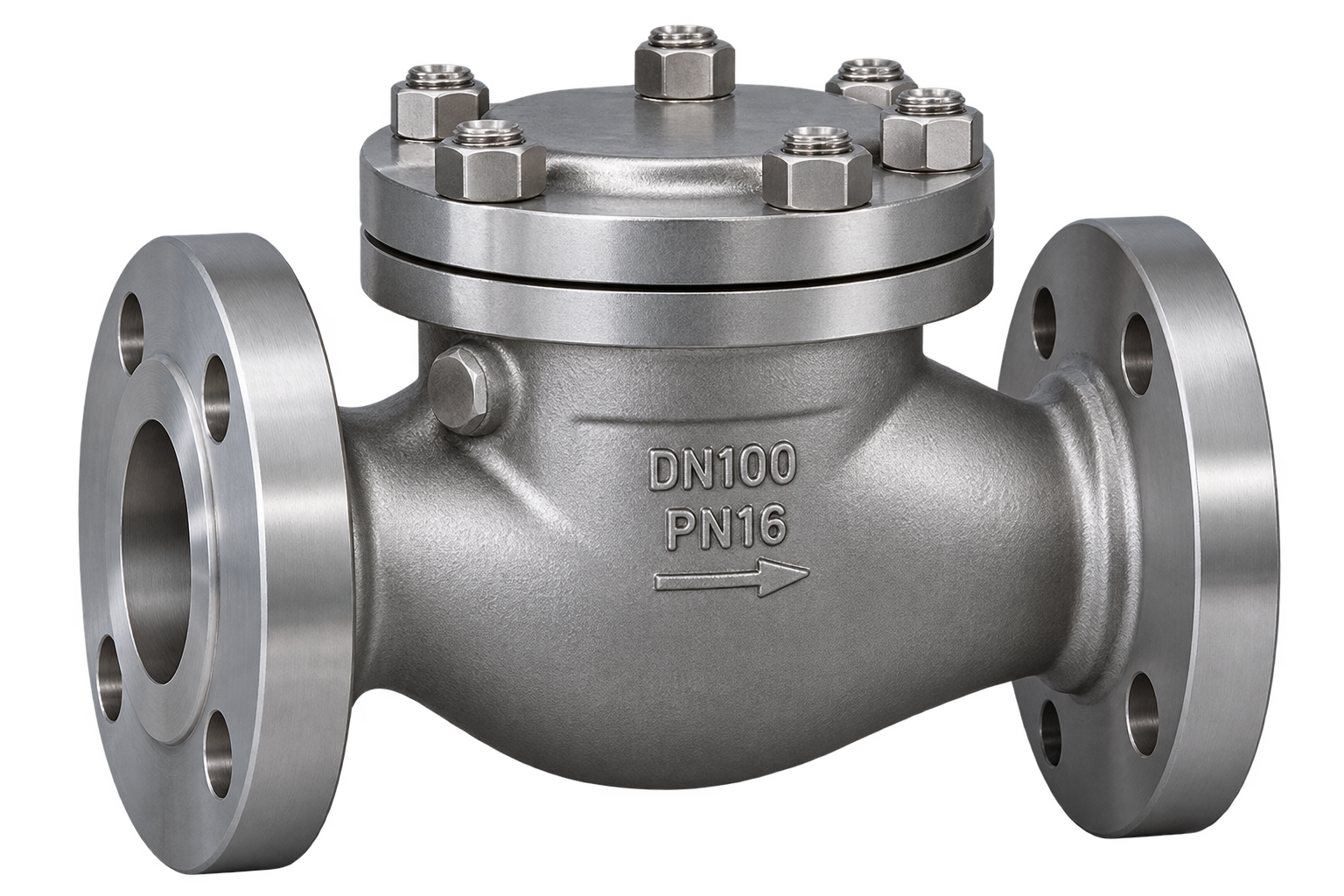
Why Choose Check Valves?
Prevents Reverse Flow
Check valves are designed to allow flow in the intended direction while preventing or limiting reverse flow through the piping system.
Automatic Operation
Check valves generally operate automatically based on differential pressure and flow direction without requiring a handwheel or lever.
Pipeline Protection
Properly selected check valves can help protect pumps, compressors and other equipment from unwanted reverse flow.
Multiple Designs
Swing, wafer, lift, piston and dual plate designs provide options for different piping configurations and service conditions.
Types of Check Valves
Check valves are available in different designs according to flow characteristics, installation requirements, pressure conditions, material selection and piping configuration. The correct design should be selected according to the actual application.
Stainless Steel Check Valve
Stainless steel check valves are selected for applications requiring corrosion resistance and durable performance. They can be used in suitable chemical, pharmaceutical, food processing, water and process applications.
Carbon Steel Check Valve
Carbon steel check valves provide a strong construction for suitable industrial pressure services. Material grade selection depends on pressure, temperature, fluid and applicable standards.
Cast Iron Check Valve
Cast iron check valves are commonly used in water, utility, HVAC and general industrial piping systems where cast iron is compatible with the operating conditions.
Swing Check Valve
A swing check valve uses a hinged disc that moves away from the seat when flow travels in the permitted direction and returns toward the seat when reverse flow occurs.
Wafer Check Valve
Wafer check valves have a compact construction and are installed between pipeline flanges. Their lightweight arrangement can be useful where installation space and weight are important considerations.
Dual Plate Check Valve
A dual plate check valve uses two spring-assisted plates that open with forward flow and move toward the closed position when the flow direction changes.
Lift Check Valve
Lift check valves use a movable disc or piston that moves vertically from the seat in response to flow pressure. They are used in suitable piping systems where this operating principle is appropriate.
Piston Check Valve
Piston check valves use a piston-type closing element to control one-directional flow. They can be selected for suitable pressure and process applications.
Check Valve Manufacturer & Supplier
APEXO Valves supplies industrial check valves for applications where reverse-flow prevention and pipeline protection are required. Check valves can be selected according to valve design, material, size, pressure rating, end connection and operating conditions.
Industrial Applications
Check valves are suitable for a wide range of industrial, utility and process piping systems.
Material Options
Body and internal component materials can be selected according to fluid compatibility and service conditions.
Multiple Designs
Different check valve constructions are available for different flow and installation requirements.
Automatic Operation
Check valves operate automatically according to flow direction and differential pressure.
Check Valve Specifications
| Parameter | Typical Options |
|---|---|
| Valve Type | Swing Check, Wafer Check, Lift Check, Piston Check, Dual Plate Check |
| Body Material | Cast Iron, Ductile Iron, Carbon Steel, Stainless Steel and other suitable materials |
| Disc / Plate Material | Stainless Steel, Carbon Steel, Ductile Iron and suitable alloys |
| Seat Material | Metal Seat, EPDM, NBR, PTFE and other suitable sealing materials |
| End Connection | Flanged, Wafer, Threaded and other applicable configurations |
| Operation | Automatic Flow-Activated Operation |
| Flow Direction | One Direction |
| Pressure Rating | According to valve design and applicable standard |
| Size Range | Available in various nominal pipe sizes |
| Service | Water, Air, Gas, Oil and compatible industrial fluids |
Check Valve Chemical Composition
Check valve chemical composition depends on the exact body, disc, spring, stem and seat material grades used in construction. The following table provides general material families commonly used in industrial check valves. Exact composition should be verified against the specified material standard.
| Material | General Composition | Typical Application Consideration |
|---|---|---|
| Cast Iron | Iron-carbon alloy containing silicon and controlled alloying elements | Water, utility and general industrial services |
| Ductile Iron | Iron-carbon-silicon alloy with controlled graphite structure | Water distribution and industrial piping |
| Carbon Steel | Iron-carbon alloy containing manganese and controlled residual elements | Industrial pressure applications |
| Stainless Steel | Iron-based alloy containing chromium and, depending on grade, nickel and other alloying elements | Corrosion-sensitive and process applications |
| EPDM | Synthetic elastomer designed for suitable water and utility services | Water and compatible fluid applications |
| NBR | Nitrile-based synthetic elastomer | Compatible oil and utility services |
Mechanical Properties of Check Valve Materials
Mechanical properties vary according to the exact material grade, manufacturing process and applicable standard. Important properties include strength, hardness, ductility, toughness and corrosion resistance.
| Material | General Mechanical Characteristics |
|---|---|
| Cast Iron | Good rigidity and compressive strength for suitable valve applications |
| Ductile Iron | Improved ductility and toughness compared with conventional cast iron |
| Carbon Steel | Good strength and durability for suitable industrial pressure services |
| Stainless Steel | Good strength and corrosion resistance depending on the selected grade |
| Elastomer Seat | Flexible sealing characteristics within the specified service conditions |
Check Valve Design & Construction
Check valves are designed to permit flow in one direction and prevent reverse flow. Different designs use different closing elements depending on the required flow characteristics, pressure conditions and installation arrangement.
Valve Body
The valve body contains the internal components and provides the connection between the valve and pipeline. Body material is selected according to the operating medium and conditions.
Disc or Plate
The disc or plate acts as the primary closing element. It moves according to the direction and pressure of the flowing medium.
Hinge or Spring Mechanism
Depending on the design, a hinge, spring or other mechanism assists the closing element in returning toward the closed position when flow conditions change.
Seat
The seat provides the sealing surface when the check valve moves toward the closed position. Seat selection depends on fluid compatibility, pressure and temperature.
Flow Passage
The internal flow passage is designed to allow forward flow while supporting the required reverse-flow prevention characteristics of the valve.
Applications of Check Valves
Check valves are used across industrial and utility systems where reverse-flow prevention is required.
- Water Treatment: Water supply, filtration and treatment systems.
- Oil & Gas: Compatible pipeline and process applications.
- Chemical Industry: Process systems handling compatible chemicals.
- Petrochemical: Process and utility piping systems.
- Power Plants: Cooling water, boiler-related and utility systems where the selected design is suitable.
- Pump Systems: Used to help prevent reverse flow through pump discharge piping where appropriate.
- HVAC: Water circulation and compatible utility systems.
- General Industries: Industrial water, air, gas and compatible fluid systems.
How to Select the Right Check Valve?
Check valve selection should be based on the actual piping and process conditions. Important factors include:
- Pipeline Size: Select the correct nominal valve size.
- Pressure Rating: Check the valve rating against operating and design pressure.
- Temperature: Consider minimum and maximum operating temperatures.
- Fluid: Verify body, disc and seat material compatibility.
- Flow Direction: Confirm the valve orientation and required flow direction.
- Valve Design: Select swing, wafer, dual plate, lift or piston construction according to application requirements.
- End Connection: Select the connection compatible with the pipeline.
- Installation: Consider orientation, available space and maintenance access.
Check Valves Manufacturer & Supplier in India
APEXO Valves is a Check Valves manufacturer and supplier in India offering industrial check valve solutions for flow protection and reverse-flow prevention applications.
Our check valve range can be selected according to valve design, material, size, pressure rating, end connection and process requirements. Proper selection is important to achieve suitable flow characteristics and reliable reverse-flow protection.
Contact APEXO Valves for check valve requirements, technical specifications, material options, sizes, connection types and application-specific valve selection.
Frequently Asked Questions About Check Valves
What is a check valve?
A check valve is an automatic valve designed to allow fluid flow in one direction while preventing or limiting reverse flow through a piping system.
What is a check valve used for?
Check valves are used to prevent reverse flow and help protect pumps, compressors, pipelines and other equipment in suitable industrial and utility systems.
How does a check valve work?
A check valve operates automatically based on flow direction and differential pressure. Forward flow moves the closing element away from the seat, while reverse flow causes it to move toward the closed position.
What is an SS check valve?
An SS check valve is a stainless steel check valve used in suitable applications where corrosion resistance and material durability are required.
What is a CS check valve?
A CS check valve is a carbon steel check valve used for suitable industrial applications requiring strength and durability under specified operating conditions.
What is a CI check valve?
A CI check valve is a cast iron check valve commonly used in suitable water, utility, HVAC and general industrial piping systems.
What is a swing check valve?
A swing check valve uses a hinged disc that swings away from the seat during forward flow and moves toward the seat when reverse flow occurs.
What is a wafer check valve?
A wafer check valve is a compact check valve installed between pipeline flanges. It is commonly selected where space and weight considerations are important.
What is a dual plate check valve?
A dual plate check valve uses two plates that open under forward flow and move toward the closed position when the flow direction changes.
Where are check valves used?
Check valves are used in water treatment, oil and gas, chemical, petrochemical, power generation, pump systems, HVAC and general industrial piping applications.
How do I select a check valve?
Check valve selection depends on pipeline size, pressure, temperature, fluid compatibility, flow direction, valve design, end connection, installation orientation and applicable standards.