
Globe Valves Manufacturer & Supplier in India
Globe valves are industrial flow control valves designed for regulating, throttling and isolating the flow of liquids, gases and compatible process fluids in pipeline systems. APEXO Valves offers different globe valve constructions including stainless steel, carbon steel, cast iron, brass and FCS globe valves for a wide range of industrial applications.
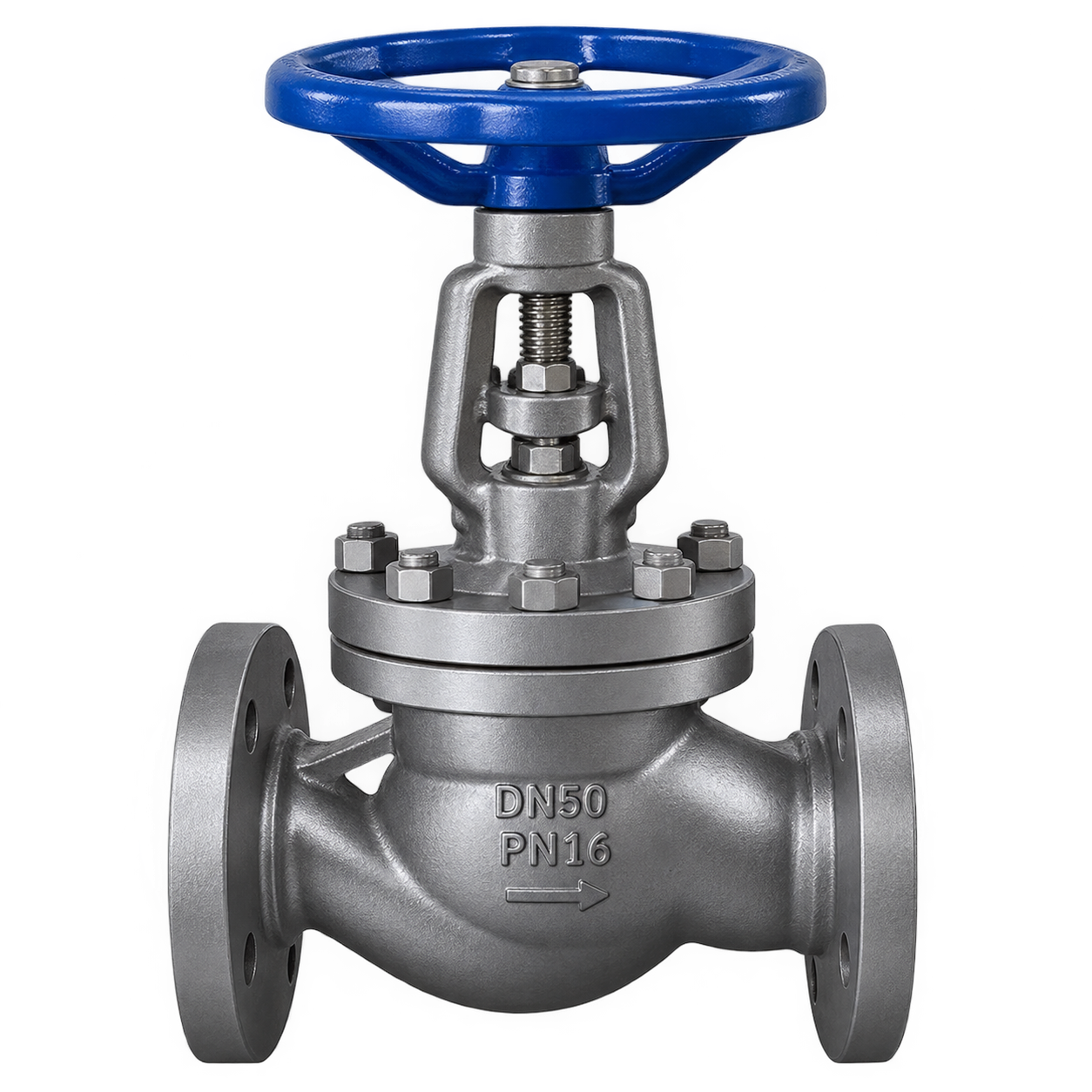
Industrial Globe Valves
A globe valve is a linear-motion valve in which a movable disc or plug moves toward and away from a stationary seat to control fluid flow. The internal flow path of a globe valve is designed to provide controlled flow regulation, making globe valves suitable for applications where flow adjustment and throttling are required.
Globe valves are widely used in industrial piping systems, water treatment plants, chemical processing facilities, refineries, petrochemical plants, power generation units, oil and gas installations and general process industries. Depending on the application, globe valves can be supplied in different body materials, pressure classes, sizes, end connections and operating arrangements.
Proper globe valve selection should consider the operating pressure, temperature, fluid characteristics, required flow control, valve size, body and trim material, pressure class, end connection and applicable design or manufacturing standard.
Why Are Globe Valves Used?
Flow Regulation
Globe valves are designed to regulate and control fluid flow, making them suitable for applications where precise flow adjustment is required.
Throttling Service
The valve construction allows the disc to be positioned at different openings for suitable throttling and process-flow control applications.
Multiple Materials
Globe valves are available in stainless steel, carbon steel, cast iron, brass, FCS and other specified material combinations.
Industrial Applications
They are used across oil and gas, chemical, petrochemical, power, water treatment and general process industries.
Types of Globe Valves
Globe valves can be classified according to their body material, pressure rating, end connection, design configuration and applicable standard. Common material options include SS globe valves, CS globe valves, CI globe valves, brass globe valves and FCS globe valves. Carbon steel globe valves may also be manufactured or supplied according to specific standards such as DIN standards where required by the application.
SS Globe Valve
Stainless steel globe valves are selected for applications where the specified stainless steel grade provides the required corrosion resistance, mechanical performance and compatibility with the process medium. Stainless steel globe valves may be considered for chemical processing, pharmaceutical, food processing, water treatment and other industrial applications depending on the selected grade and operating conditions.
Stainless steel grades can contain different levels of chromium, nickel, molybdenum and other alloying elements. The exact grade should therefore be selected according to the fluid, temperature, pressure, corrosion environment and applicable project specification.
CS Globe Valve
Carbon steel globe valves are commonly used in industrial flow control systems where the selected carbon steel grade provides the required strength and service compatibility. They can be used in suitable oil and gas, refinery, petrochemical, power generation and general industrial piping applications.
Carbon steel globe valve selection depends on operating pressure, temperature, fluid characteristics, body construction, trim materials and the applicable valve standard. The final material specification should always be confirmed against the product datasheet and project requirements.
CI Globe Valve
Cast iron globe valves are used for compatible water, utility and general industrial flow-control applications. Cast iron provides a practical material option for systems where its mechanical and corrosion characteristics are suitable for the intended service.
CI globe valve selection should consider the operating pressure, temperature, fluid compatibility, valve size and applicable design requirements before installation.
Brass Globe Valve
Brass globe valves are manufactured using copper-zinc alloy materials and can be used for compatible water, utility and general service applications. Brass offers good machinability and suitable corrosion resistance for many service environments.
The exact brass grade should be selected according to the required pressure, temperature, fluid compatibility, mechanical properties and application requirements.
FCS Globe Valve
FCS globe valves are industrial flow control valves manufactured according to specified material, design and application requirements. They can be considered for suitable industrial piping systems where the specified FCS material provides the required mechanical and service characteristics.
Exact material composition, pressure rating, dimensions and applicable standards should be confirmed from the relevant product datasheet and technical documentation.
CS Globe Valve DIN Standard
CS globe valves manufactured or supplied to DIN standard requirements are selected for projects where the specified DIN design, dimensions, pressure requirements or material standards are applicable. These valves can be used in compatible industrial piping and flow-control systems.
The applicable DIN standard and complete valve specification should be confirmed according to the project requirement, pressure class, nominal size, material grade, end connection and service conditions.
Why APEXO Valves?
APEXO Valves is focused on delivering reliable valve solutions designed for industrial flow control applications where dependable performance, controlled flow and long service life are important. Our globe valves are available in different material options, pressure ratings, sizes and end connections to suit diverse process and piping requirements.
With attention to valve construction, material selection, dimensional accuracy, sealing performance and application requirements, APEXO Valves supports industries looking for practical flow-control solutions. Globe valves can be selected for suitable water, oil and gas, chemical, petrochemical, power generation and general process applications according to operating conditions and project specifications.
Globe Valve Specifications
Globe valve specifications vary according to the selected material, valve design, nominal size, pressure rating, temperature and application. Typical specification parameters include the following:
| Parameter | Typical Specification |
|---|---|
| Valve Type | Globe Valve / Industrial Flow Control Valve |
| Body Material | Stainless Steel / Carbon Steel / Cast Iron / Brass / FCS / Other specified materials |
| Bonnet Material | According to valve design and material specification |
| Disc / Plug | According to valve design, trim material and service requirement |
| Stem | Stainless Steel / Alloy Steel / Other specified material |
| Seat | Metal Seat / Soft Seat / Other specified construction |
| End Connection | Flanged / Threaded / Socket Weld / Butt Weld |
| Operation | Handwheel / Gear Operated / Actuated |
| Pressure Rating | As per applicable valve standard and customer specification |
| Size | As per product design and project requirement |
| Service | Water, oil, gas and compatible industrial fluids |
Chemical Composition of Globe Valve Materials
The chemical composition of a globe valve depends on the exact material grade specified for the body, bonnet, stem, disc, seat and other components. The table below provides general material information rather than grade-specific chemical certificate values. Actual composition should be verified against the applicable material standard and material test certificate where required.
| Material | Principal Elements | General Characteristics |
|---|---|---|
| Stainless Steel | Iron, Chromium, Nickel; Molybdenum and other elements vary by grade | Corrosion resistance and process compatibility |
| Carbon Steel | Iron, Carbon, Manganese and controlled alloying/residual elements | Strength and industrial pressure-service applications |
| Cast Iron | Iron, Carbon, Silicon, Manganese and grade-specific elements | Suitable for compatible water and utility systems |
| Brass | Copper and Zinc with grade-specific additions | Good machinability and suitable corrosion resistance |
Mechanical Properties
Mechanical properties of globe valve components depend on the exact material grade, manufacturing process, heat treatment and applicable standard. Important properties considered during material selection include tensile strength, yield strength, elongation, hardness, toughness and resistance to the intended operating environment.
| Material | Important Properties | Typical Selection Consideration |
|---|---|---|
| Stainless Steel | Strength, toughness, hardness, elongation and corrosion resistance depend on grade | Corrosion, temperature and process-media compatibility |
| Carbon Steel | Strength and toughness vary with grade and heat treatment | Pressure, temperature and industrial service |
| Cast Iron | Good compressive strength with ductility depending on iron type | Water and utility services |
| Brass | Good machinability, moderate strength and corrosion resistance | Compatible fluid and temperature requirements |
Globe Valve Design and Construction
Valve Body
The valve body is the primary pressure-containing component of a globe valve. It houses the internal components and provides the flow passage between the connected pipeline sections.
Bonnet
The bonnet closes the upper portion of the valve body and supports or encloses the stem and other internal components. Bonnet construction varies according to valve design, pressure rating and service requirements.
Disc or Plug
The disc or plug is the primary flow-control element of a globe valve. Its movement toward or away from the seat changes the available flow passage and allows the valve to control the process flow.
Stem
The stem transfers movement from the handwheel, gearbox or actuator to the disc. Stem material and construction are selected according to the valve design and operating conditions.
Valve Seat
The valve seat provides the sealing interface with the disc. Seat construction and material depend on the valve design, fluid characteristics, temperature, pressure and required sealing performance.
Globe Valve Applications
Globe valves are used in industrial and utility systems where flow regulation, throttling or controlled isolation is required. Typical applications include:
- Oil & Gas Industry
- Petrochemical Plants
- Oil Refineries
- Chemical Processing Plants
- Water Treatment Plants
- Power Generation Plants
- Pharmaceutical Industries
- Fertilizer Plants
- Pulp & Paper Industry
- Marine Applications
- Industrial Utility Systems
- Process Industries
How to Select a Globe Valve?
Selecting the correct globe valve requires evaluation of the complete operating environment. Important factors include nominal pipe size, pressure rating, operating temperature, fluid composition, required flow-control characteristics, body material, trim material, seat construction, end connection and operating method.
Material compatibility is particularly important when selecting a globe valve. For corrosive process environments, an appropriate stainless steel grade or other corrosion- resistant material may be considered. Carbon steel may be specified for suitable industrial pressure applications, while cast iron and brass can be selected for compatible utility and general services.
The required valve standard should also be considered. Projects may specify particular dimensional, pressure, testing or manufacturing requirements. Where a DIN standard globe valve is required, the applicable DIN specification should be confirmed before ordering.
Globe Valve Manufacturer and Supplier in India
APEXO Valves supplies globe valve solutions for industrial and utility flow-control applications. The available range includes SS globe valves, carbon steel globe valves, cast iron globe valves, brass globe valves, FCS globe valves and CS globe valves manufactured or supplied according to specified requirements.
Globe valves can be selected according to material, size, pressure class, end connection, operating arrangement, application and applicable standard. Customers can provide their technical requirements when requesting a quotation. Product availability and exact technical specifications should be confirmed against the applicable product datasheet.
Frequently Asked Questions About Globe Valves
What is a globe valve?
A globe valve is a linear-motion valve used to regulate, throttle or isolate the flow of liquids, gases and compatible process fluids. Its disc moves toward or away from a seat to control the flow passage.
What is a globe valve used for?
Globe valves are commonly used for flow regulation, throttling and controlled isolation in water, oil and gas, chemical, petrochemical, power and other industrial pipeline systems.
How does a globe valve work?
A globe valve works by moving a disc or plug toward or away from a stationary seat. Raising the disc increases the flow passage, while lowering it reduces or closes the flow passage.
What is an SS globe valve?
An SS globe valve is a stainless steel globe valve used for compatible industrial flow-control applications. The exact stainless steel grade is selected according to the fluid, pressure, temperature and corrosion requirements.
What is a CS globe valve?
A CS globe valve is a carbon steel globe valve used for compatible industrial services. The selected carbon steel grade depends on pressure, temperature, fluid characteristics and applicable standards.
What is a CI globe valve?
A CI globe valve is a cast iron globe valve commonly used for suitable water, utility and general industrial flow-control applications.
What is a brass globe valve?
A brass globe valve uses brass as a principal valve material and can be used for compatible water, utility and general service applications.
Are globe valves suitable for throttling?
Globe valves are commonly used for flow regulation and throttling because their disc movement allows the flow passage to be adjusted. The exact valve design should be selected according to the required control characteristics and service conditions.
How do I select a globe valve?
Globe valve selection should consider pipe size, pressure, temperature, fluid, required flow regulation, material compatibility, seat and trim materials, end connection, operating method and applicable valve standard.
What is a CS globe valve DIN standard?
A CS globe valve DIN standard refers to a carbon steel globe valve manufactured or supplied to the applicable DIN requirements specified for the project. The exact DIN standard should be confirmed according to the required design, dimensions, pressure and service conditions.
Where are globe valves used?
Globe valves are used in refineries, oil and gas facilities, petrochemical plants, chemical processing units, power plants, water treatment systems and other industrial process pipelines.