
Plug Valves Manufacturer & Supplier in India
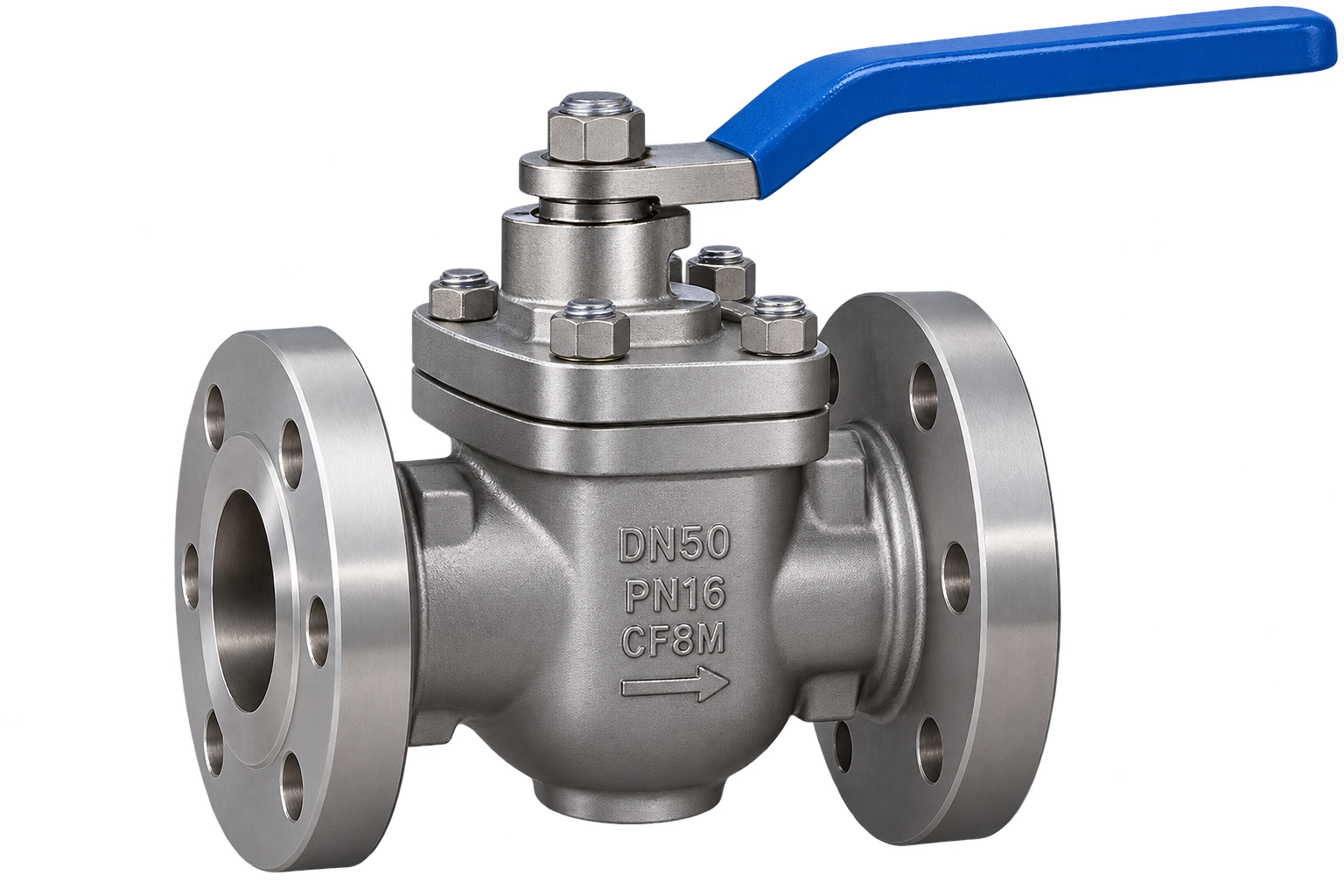
APEXO Valves is a Plug Valves manufacturer and supplier in India, offering industrial plug valves designed for reliable flow isolation, shut-off and process piping applications. Plug valves use a cylindrical or tapered plug with a passage through it to control the movement of fluid through a pipeline.
Plug valves are widely considered for applications requiring dependable isolation and relatively simple quarter-turn operation. Depending on the service requirements, plug valves can be supplied in different materials, pressure classes, end connections and construction designs. Suitable selections are used across oil and gas, chemical, petrochemical, water, power generation and general industrial piping systems.
Why Choose Plug Valves?
Reliable Isolation
Plug valves are designed primarily for flow isolation, providing a straightforward shut-off arrangement for suitable industrial piping systems.
Quarter-Turn Operation
Many plug valve designs use a quarter-turn movement of the plug, allowing convenient operation between open and closed positions.
Robust Construction
Plug valves can be manufactured with robust bodies and internal components selected according to the operating medium and service conditions.
Multiple Configurations
Different plug valve designs, materials and end connections are available for a range of industrial piping requirements.
Types of Plug Valves
Plug valves are available in several designs to suit different operating conditions, fluid characteristics, pressure requirements and installation arrangements. The appropriate construction should be selected according to the actual application.
Stainless Steel Plug Valve
Stainless steel plug valves are used in suitable applications where corrosion resistance and material durability are important. They can be considered for chemical, process, pharmaceutical and other compatible industrial services.
Carbon Steel Plug Valve
Carbon steel plug valves provide a strong valve body construction for suitable industrial services. The exact carbon steel grade is selected according to pressure, temperature, fluid and applicable specifications.
Cast Iron Plug Valve
Cast iron plug valves can be used in suitable water, utility and general industrial applications where cast iron provides the required compatibility and mechanical characteristics.
Lubricated Plug Valve
Lubricated plug valves use a lubricant around the plug and sealing surfaces to assist operation and sealing in applications for which this design is appropriate. Lubricant compatibility must be considered for the specific service.
Non-Lubricated Plug Valve
Non-lubricated plug valves use engineered sealing arrangements without routine lubrication of the plug during normal operation. They are selected for suitable services based on design and material compatibility.
Sleeved Plug Valve
Sleeved plug valves incorporate a sleeve around the plug to provide the sealing interface. Sleeve material selection depends on the process fluid, temperature and pressure conditions.
Eccentric Plug Valve
Eccentric plug valves use an offset plug arrangement that can reduce rubbing between the plug and seat during operation. They are commonly considered for suitable isolation applications.
Three-Way Plug Valve
Three-way plug valves are designed with multiple ports and can be used to direct or isolate flow between different piping paths, depending on the plug configuration.
Plug Valve Manufacturer & Supplier
APEXO Valves supplies industrial plug valves for applications requiring dependable flow isolation and shut-off. Our plug valve solutions can be selected according to valve construction, body material, sealing arrangement, pressure class, size and end connection.
Depending on the process requirement, customers can consider stainless steel, carbon steel, cast iron and other suitable material options. The correct valve configuration should always be established from the actual operating pressure, temperature, fluid characteristics and applicable design standards.
Industrial Supply
Plug valves for suitable industrial and process piping applications.
Material Options
Material selection based on fluid compatibility and operating conditions.
Multiple Designs
Lubricated, non-lubricated, sleeved and eccentric designs for different requirements.
Application Support
Valve selection based on size, pressure, temperature, fluid and connection requirements.
Plug Valve Specifications
| Parameter | Typical Options |
|---|---|
| Valve Type | Lubricated, Non-Lubricated, Sleeved, Eccentric and Multi-Port Plug Valves |
| Body Material | Cast Iron, Carbon Steel, Stainless Steel and other suitable materials |
| Plug Material | Stainless Steel, Carbon Steel and other suitable alloys |
| Seat / Sleeve | PTFE, Elastomer, Metal and other application-specific materials |
| End Connection | Flanged, Threaded and other applicable connection configurations |
| Operation | Manual, Gear Operated or Actuated |
| Port Configuration | Full Port, Reduced Port and Multi-Port configurations |
| Pressure Rating | According to valve design and applicable standard |
| Size Range | Available in various nominal pipe sizes |
| Service | Water, Oil, Gas, Chemical and compatible industrial fluids |
Plug Valve Chemical Composition
The chemical composition of a plug valve depends on the exact material grade used for the body, plug, stem and other pressure-retaining or wetted components. The following table provides general material families. Exact chemistry should be confirmed against the specified material standard and grade.
| Material | General Composition | Typical Consideration |
|---|---|---|
| Cast Iron | Iron-carbon alloy containing silicon and controlled alloying elements | Water, utility and general industrial services |
| Carbon Steel | Iron-carbon alloy containing manganese and controlled residual elements | Industrial pressure services |
| Stainless Steel | Iron-based alloy containing chromium and, depending on grade, nickel and other alloying elements | Corrosion-sensitive process applications |
| PTFE | Fluoropolymer based on carbon and fluorine | Suitable chemical and process sealing applications |
| EPDM | Synthetic elastomer based on ethylene, propylene and diene components | Suitable water and utility applications |
Mechanical Properties of Plug Valve Materials
Mechanical properties vary according to the specific material grade, manufacturing process and applicable standard. Strength, hardness, toughness, ductility and corrosion resistance are important factors when selecting valve materials.
| Material | General Mechanical Characteristics |
|---|---|
| Cast Iron | Good rigidity and compressive strength for suitable valve applications |
| Carbon Steel | Good strength, toughness and durability depending on the selected grade |
| Stainless Steel | Good strength and corrosion resistance depending on grade and service |
| PTFE | Low-friction sealing characteristics and chemical resistance for suitable services |
| EPDM | Flexible sealing characteristics for compatible service conditions |
Plug Valve Design & Construction
Plug valves consist of a valve body containing a plug with a passage through it. Rotating the plug changes the alignment of the passage with the pipeline, allowing the valve to move between open and closed positions.
Valve Body
The body forms the pressure-retaining enclosure and provides the connection between the valve and piping system. Material selection depends on the pressure, temperature and fluid service.
Plug
The plug is the primary rotating closure element. Its passage and geometry determine the flow arrangement and operating characteristics of the valve.
Stem
The stem connects the operating mechanism to the plug and transfers the required rotational movement. Stem construction depends on the valve design and material specification.
Seat or Sleeve
The sealing arrangement may use a sleeve, elastomer, PTFE or metal seating system depending on the valve construction and process conditions.
Operating Mechanism
Plug valves can be operated manually or equipped with suitable gearboxes, pneumatic actuators or electric actuators according to valve size and operating requirements.
Applications of Plug Valves
Plug valves are used in a variety of industrial piping systems where dependable isolation and shut-off are required.
- Oil & Gas: Pipeline, process and suitable hydrocarbon services.
- Petrochemical: Process and utility piping applications.
- Chemical Industry: Compatible chemical and process services.
- Water Treatment: Water handling, treatment and utility systems.
- Power Plants: Suitable process and utility piping systems.
- Refineries: Suitable hydrocarbon and process isolation applications.
- Industrial Processing: General process and fluid-handling systems.
- General Industries: Compatible liquid and gas piping services.
How to Select the Right Plug Valve?
Selecting a suitable plug valve requires evaluation of the complete operating environment. Important considerations include:
- Pipeline Size: Select the appropriate nominal valve size.
- Pressure: Confirm the valve pressure rating against the design conditions.
- Temperature: Check material and sealing suitability at operating temperature.
- Fluid: Verify compatibility of body, plug and sealing materials.
- Valve Design: Select lubricated, non-lubricated, sleeved or eccentric construction as required.
- Port: Determine whether full, reduced or multi-port construction is appropriate.
- Connection: Select flanged, threaded or other suitable connections.
- Operation: Determine whether manual or actuated operation is required.
Plug Valves Manufacturer & Supplier in India
APEXO Valves is a Plug Valves manufacturer and supplier in India providing industrial valve solutions for flow isolation, shut-off and process piping requirements.
Plug valves can be selected according to material, construction, size, pressure class, temperature, end connection and service medium. Proper engineering selection helps ensure that the valve is suitable for the intended application.
Contact APEXO Valves for plug valve requirements, technical specifications, material options, sizes, pressure requirements and application-specific selection.
Frequently Asked Questions About Plug Valves
What is a plug valve?
A plug valve is a rotary valve that uses a cylindrical or tapered plug with a passage through it to control or isolate fluid flow in a piping system.
What is a plug valve used for?
Plug valves are primarily used for flow isolation and shut-off in suitable industrial, process, utility, oil and gas, chemical and petrochemical piping systems.
How does a plug valve work?
A plug valve works by rotating the plug inside the valve body. When the plug passage aligns with the pipeline, flow can pass. Rotating the plug away from the aligned position closes the flow passage.
What is an SS plug valve?
An SS plug valve is a stainless steel plug valve used in suitable applications where corrosion resistance and material durability are required.
What is a CS plug valve?
A CS plug valve is a carbon steel plug valve used for suitable industrial services where carbon steel provides the required strength and compatibility.
What is a CI plug valve?
A CI plug valve is a cast iron plug valve commonly considered for suitable water, utility and general industrial applications.
What is a lubricated plug valve?
A lubricated plug valve uses lubricant around the plug and sealing surfaces to assist operation and sealing for suitable service conditions.
What is a non-lubricated plug valve?
A non-lubricated plug valve uses an engineered sealing system that does not require routine lubrication of the plug during normal operation.
What is a sleeved plug valve?
A sleeved plug valve uses a sleeve around the plug as part of its sealing arrangement. The sleeve material is selected based on the fluid and operating conditions.
Where are plug valves used?
Plug valves are used in oil and gas, petrochemical, chemical, water treatment, power generation, refinery, process and general industrial piping applications.
How do I select a plug valve?
Plug valve selection depends on pipeline size, pressure, temperature, fluid compatibility, valve construction, port configuration, end connection, operation and applicable standards.